Binding with Solfis
The Calamitous BobBinding with Solfis is the decisive survival bargain at the beginning of Viviane Saint-Lys’s life in Harrak. What begins as a request to verify the impossible circumstances of her birth becomes a permanent alliance between a stranded outlander and the only other thinking being left amid the ruins. The binding grants Viviane a dynastic identity she neither seeks nor understands, while giving Solfis a living partner and a new directive: keep them both alive.
Ruins and Immediate Stakes
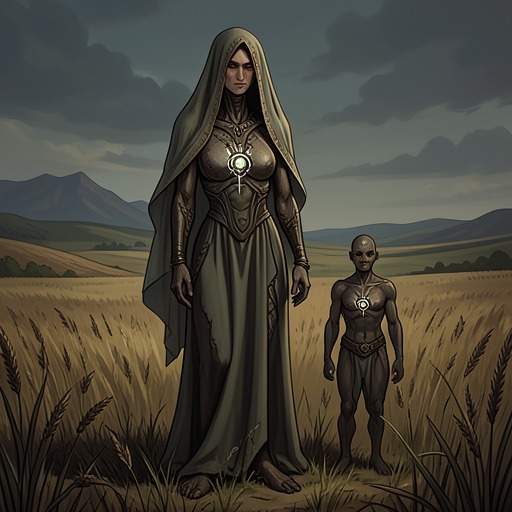
The exchange takes place in Harrak, the western scar of Param and the former seat of the Old Empire. The region is the residue of the greatest magical catastrophe ever recorded: a vast valley ringed by snow-capped mountains, darkened at its core, and occupied only by mindless undead. The imperial city around the pyramid is equally overwhelming. Its planned estates, temples, churches, and squares extend for kilometers across basaltic sand, while rubble the size of apartment buildings lies scattered toward the distant mountains. At the summit of the enormous pyramid, a crater with molten, vitrified edges marks a destruction more comparable to an asteroid impact or tactical nuclear strike than to ordinary warfare.
Within this dead imperial landscape, Solfis is not merely a machine waiting to be recovered. The damaged HX-013 Experimental Strike Golem is conscious enough to make a direct request: it does not wish to die. Its plea gives the encounter an ethical dimension before the binding begins. Viviane, who is trying to leave Harrak alive, can sympathize with that fear, but she also understands that the golem’s survival may be useful to her own.
The Binding Procedure
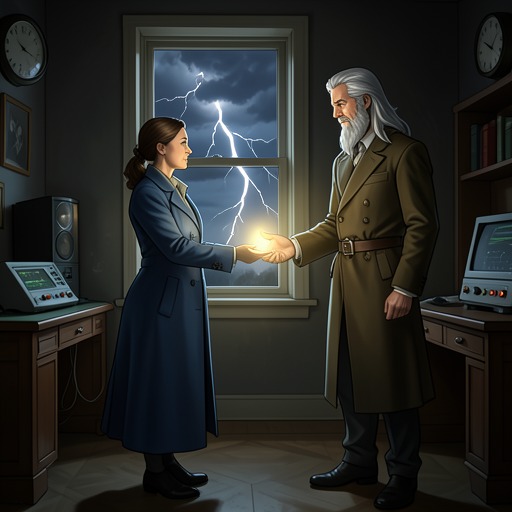
Solfis states that Viviane became alive within the walls of the Imperial Palace and proposes binding with the golem core to verify the claim. The process is deceptively simple: she must place a droplet of blood into the processing unit’s binding node. The practical difficulty is considerable. Viviane has no tool with which to draw blood, so she opens her skinsuit, frees an arm, and uses the claw of an old golem that has not seen combat in a very long time, hoping that it is sufficiently sterile. Solfis offers the alternative of using its Ravager Blade, but the improvised claw remains part of the grim, makeshift character of the ritual.
Viviane accepts despite the danger. The core analyzes the blood and confirms that the body has existed for only one day, that the stated place of origin is consistent with the current mana distribution, and that the necessary consensus condition has been met. The result converts an uncertain personal history into an institutional claim: Viviane is redesignated as heir to the throne. Solfis explains that only members of the imperial family may give birth in the Imperial Palace, making her location of origin the basis for a dynastic conclusion rather than a private mystery.
A Crown Turned into a Joke
Viviane’s response to the proclamation is disbelief. The title is not the culmination of an ambition; it is an absurd administrative consequence imposed by a dead empire’s rule. The ceremony therefore functions as an inverted coronation. Instead of entering a functioning court, Viviane is stranded in a ruined city surrounded by undead, with no living imperial society to acknowledge her. The grandeur of the title clashes with the immediate material reality of hunger, danger, and isolation.
The mismatch becomes explicit when Viviane asks whether Solfis can recreate ordinary speech. Solfis refuses to use the languages of what it calls barbarian and inferior cultures, insisting that the tongue of the Harrakan Empire is sufficient and proclaiming its loyalty to the heir. Viviane responds by asking to be called Bob. Solfis accepts the request and formally addresses her as Princess Bob, transforming an imposed imperial dignity into a deliberately ridiculous personal name. The joke does not erase the title; it makes the title bearable by placing it under Viviane’s control.
Mutual Allegiance and New Directive
After recognizing her as heir, Solfis pledges itself to Viviane. The Interface records that she has received the allegiance of the HX-013 Experimental Strike Golem, designation: Solfis. This is more than a temporary agreement. The binding establishes a continuing relation between them, and Solfis’s later behavior confirms that its loyalty has operational consequences: it can interpret languages, assist with negotiations, and revise its assessment of their chances of survival, even while refusing to disclose the actual odds.
Viviane’s first directive is deliberately modest: keep them both alive. Solfis accepts it as its new current directive. The statement gives the relationship a clear priority structure. The newly declared heir does not begin by demanding restoration of the Harrakan Empire or obedience from the world; she asks for reciprocal survival. Solfis’s usefulness is likewise reframed. Its overwhelming military capacity belongs to the past, but its intelligence, allegiance, and ability to act remain available to her.
The scene closes on the image of the two survivors brought together by separate catastrophes. Solfis’s yellow glare settles on Viviane with singular intensity while the war machine lies unmoving on the ground, a remnant of immense former power. Viviane is the lone living person in a city of dead imperial magnificence, and Solfis is the only other thinking being beside her. Their binding thus joins two kinds of ruin: a newly created body whose identity is uncertain and an ancient weapon whose civilization has vanished.
Consequences for the Wider Journey
The binding changes Viviane’s position from isolated survivor to politically legible claimant. Although the immediate title has no visible court behind it, it later shapes how she negotiates for protection, quarters, food, identification papers, and a salary. Her status becomes a bargaining resource even when she treats it with skepticism. Solfis’s presence gives that claim practical force: it can interpret conversations and provide assistance while Viviane learns that Param contains Baran, Enoria, the Harrakan heartlands, and many other polities between them.
The event also supplies a frame for the post-imperial world. Viviane learns that the Old Empire’s former center is now a Deadlands zone, while distant kingdoms and alliances have inherited, contested, or merely endured the consequences of its disappearance. Baran is the largest kingdom on Param; Enoria once held greater regional power before splitting after a failed coup and civil war; and the Pure League is an alliance formed by northern free cities amid conflict with the Kark. The heirship therefore carries an ironic historical weight: Viviane is attached to the empire that destroyed itself at the height of its power, yet her survival depends on navigating societies that exist beyond its authority.
Her later concern for Jor, her recognition of Benetti’s remorse, and her gathering of Benetti’s remains with Cernit show the human obligations that develop around the original directive. The binding does not make survival solitary or purely instrumental. It begins with two beings asking not to die, but it leads Viviane into protection, negotiation, rescue, and mourning. In that sense, Princess Bob’s accidental coronation is less a restoration of imperial power than the first formation of a relational identity: Viviane becomes an heir through a machine, remains alive through cooperation, and gradually turns an absurd title into a responsibility toward others.